
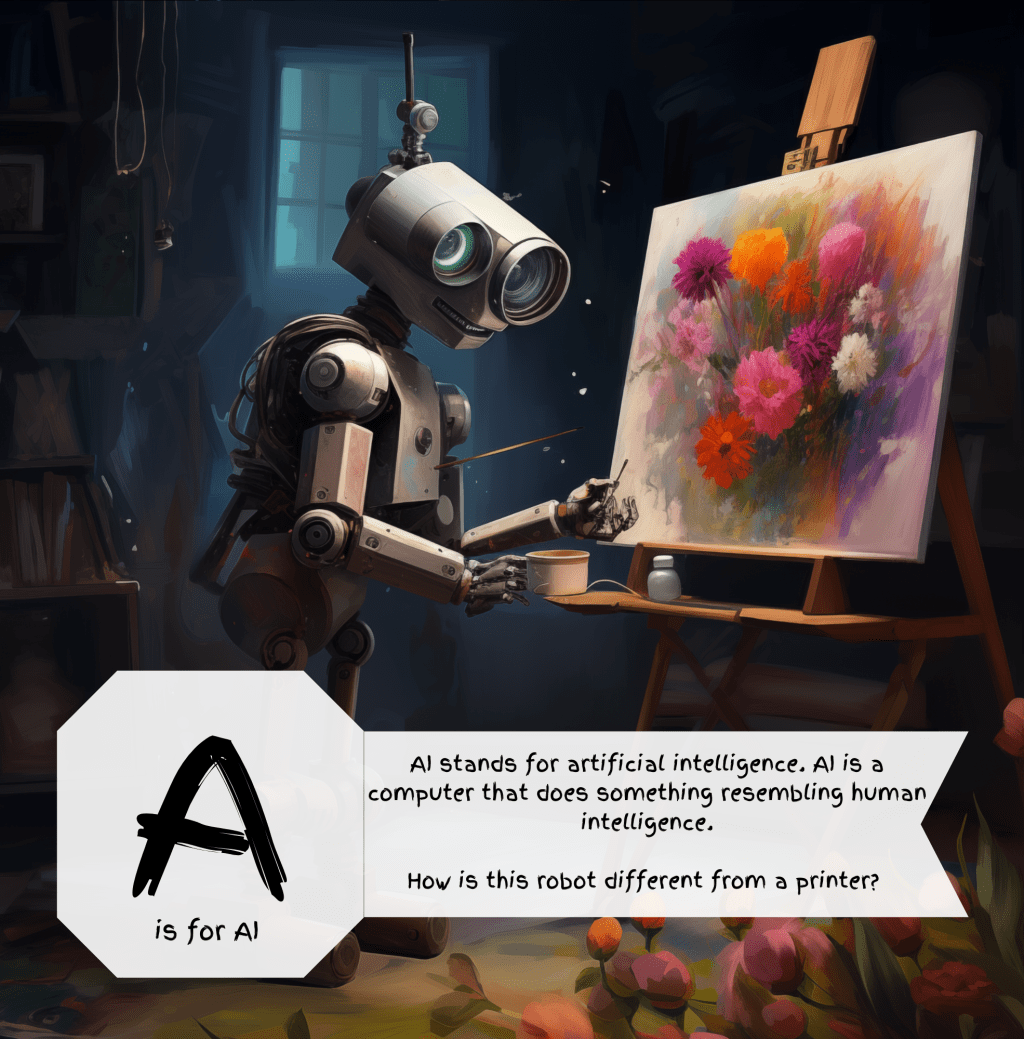
Artificial Intelligence has gained renewed popularity due to products like OpenAI’s Chat GPT. In fact, this new wave of generative AI tools are so popular, that most people now associate the term AI exclusively with this newest generation of chat bots. However, AI is a very broad term that means “any computer system that resembles human intelligence.” This broad, subjective definition leaves room for almost any computer system to claim that it is “AI powered.” In my new book “A is for AI,” I illustrate AI as a robot that is painting the flowers across the room and contrast the AI robot with a printer that simply prints the pictures sent to it.

Here are some key AI milestones…
1950 Allen Turing proposes the Turing test for machine intelligence
1956 Dartmouth conference marks the beginning of AI as a field of study
1960s and 1970s The first AI winter
1980s Expert systems gain popularity
Late 1980s and 1990s The second AI winter
1997 IBM’s Deep Blue beats Gary Kasparov in Chess
2011 Apple introduces Siri
2012 AlexNet wins the ImageNet competition for image recognition
2014 Amazon launches Alexa
2020 OpenAI introduces ChatGPT 3
2022 MidJourney, OpenAI Dall-E and Google’s Imagen all introduce text to image services
2023 OpenAI releases ChatGPT 4, Google releases Bard and Meta/Facebook releases LLaMA
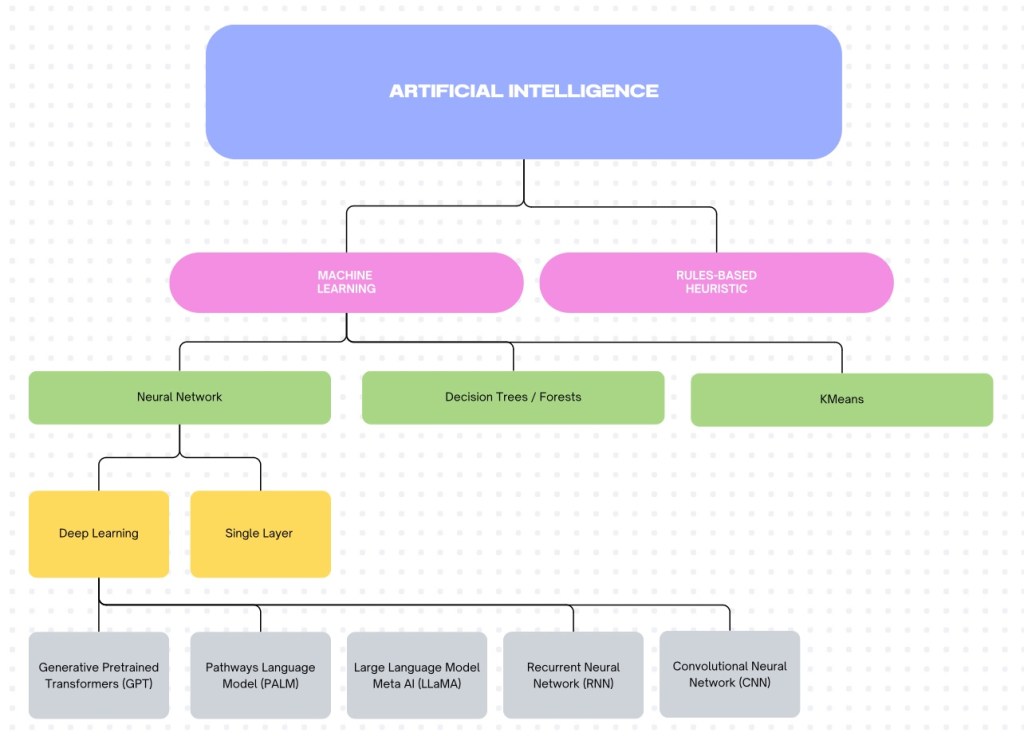
When someone talks about a “real” AI, they usually mean a system that uses machine learning and not a rules-based system. There are many types of machine learning algorithms. KMeans clustering and decision trees work well for recommendation systems, classifiers and forecasting. For bigger problems like natural language processing, image recognition or large language models, a deep learning neural network can be used.
I believe that it is good to expose kids to the vocabulary of artificial intelligence early. Even if they don’t understand everything, early exposure to these terms will make them more comfortable with these term when they hear them later in life. To this end, I write a children’s book called, “A is for AI” that introduces kids (and adults) to 26 terms used in the AI world. This new book is a sequel to the highly rated “D is for Data.” You can buy both by clicking the link below.





 Thunder Chicken Studios
Leave a comment